
QR Tiger offers a broad catalogue of QR types, design controls and campaign tools. Our September account test establishes something narrower: its Freemium workflow can deliver files, change a dynamic destination and report a small series of accesses. The anonymous download problem observed in August remains part of this review, with its date and scope made explicit.
What worked in our Freemium account test
We signed up and verified the email address on September 29, 2026. The account displayed three dynamic QR slots. We created a URL code, renamed it, visited its short link, then changed its destination from our homepage to our methodology page. The same short link reached the new page. Both browser visits briefly showed a QR TIGER-branded redirect screen; we did not time it.
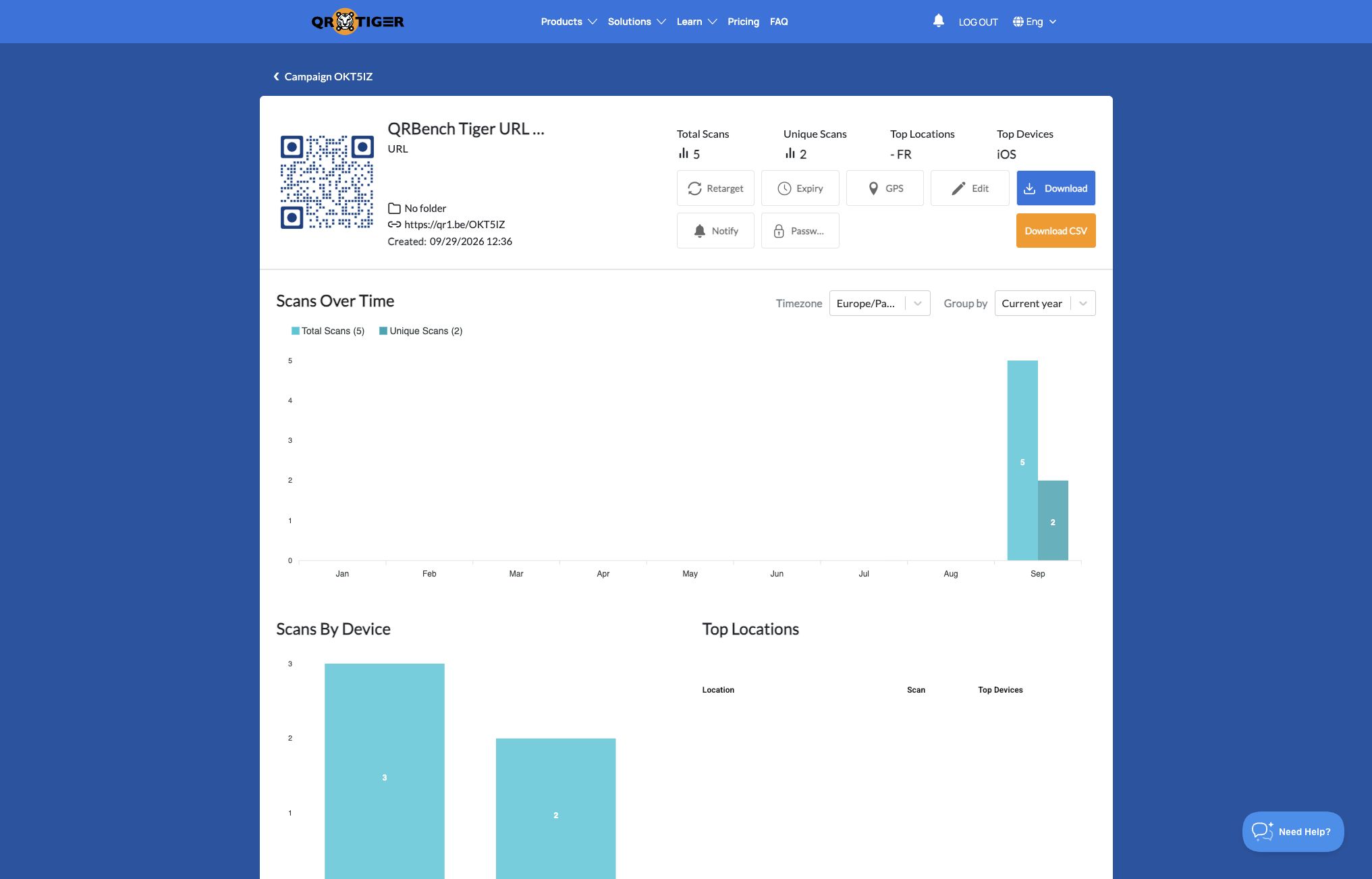
The phone tester then scanned the code three times with an iPhone and opened the destination each time. All three reached the methodology page. The dashboard moved from two scans and one unique to five scans and two uniques, with three iOS accesses and two PC accesses. The downloaded CSV contained the same five accesses, with timestamps, country FR and an empty city field.
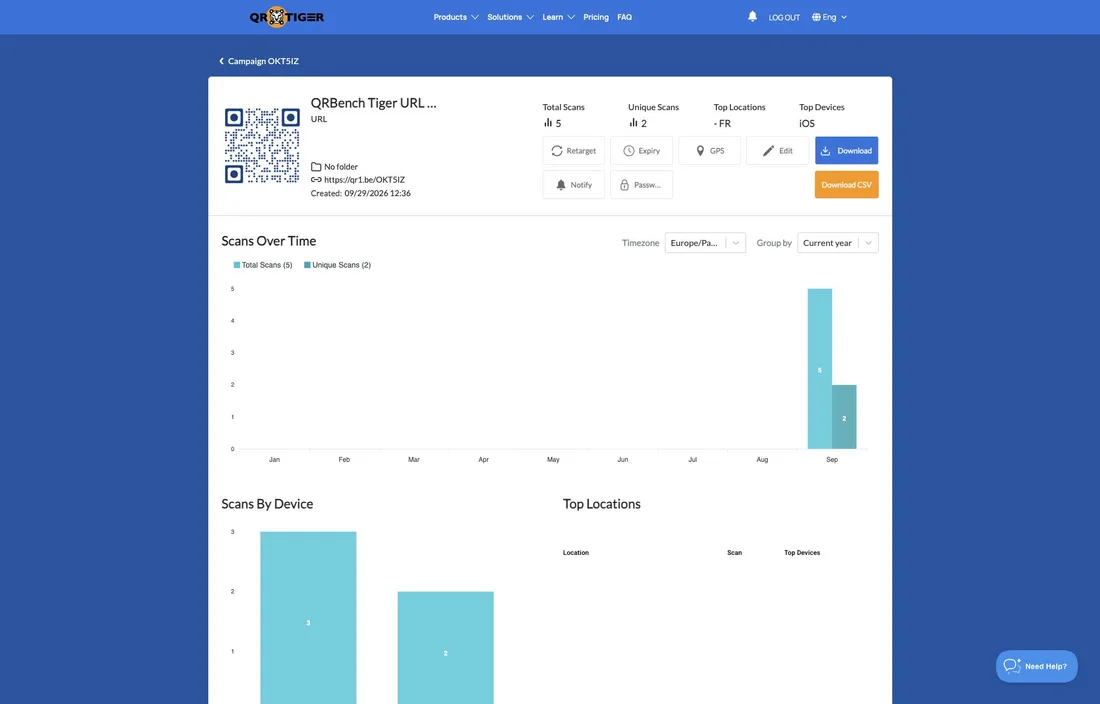
The phone had no VPN enabled; its Private Relay setting was not established. This small sample confirms matching counts and device categories. It does not establish geographic accuracy, the deduplication method, reporting latency or long-term retention.
Downloads and static output
We downloaded PNG, SVG, PDF and EPS files from the dynamic code. The PNG was 1024 × 1024 pixels and decoded to the expected short URL. The PDF rendered correctly and decoded to the same URL. The SVG contained vector paths without embedded images. The EPS had a valid EPS header and bounding box. We did not render or decode the SVG and EPS, so those checks establish less than the PNG and PDF checks.
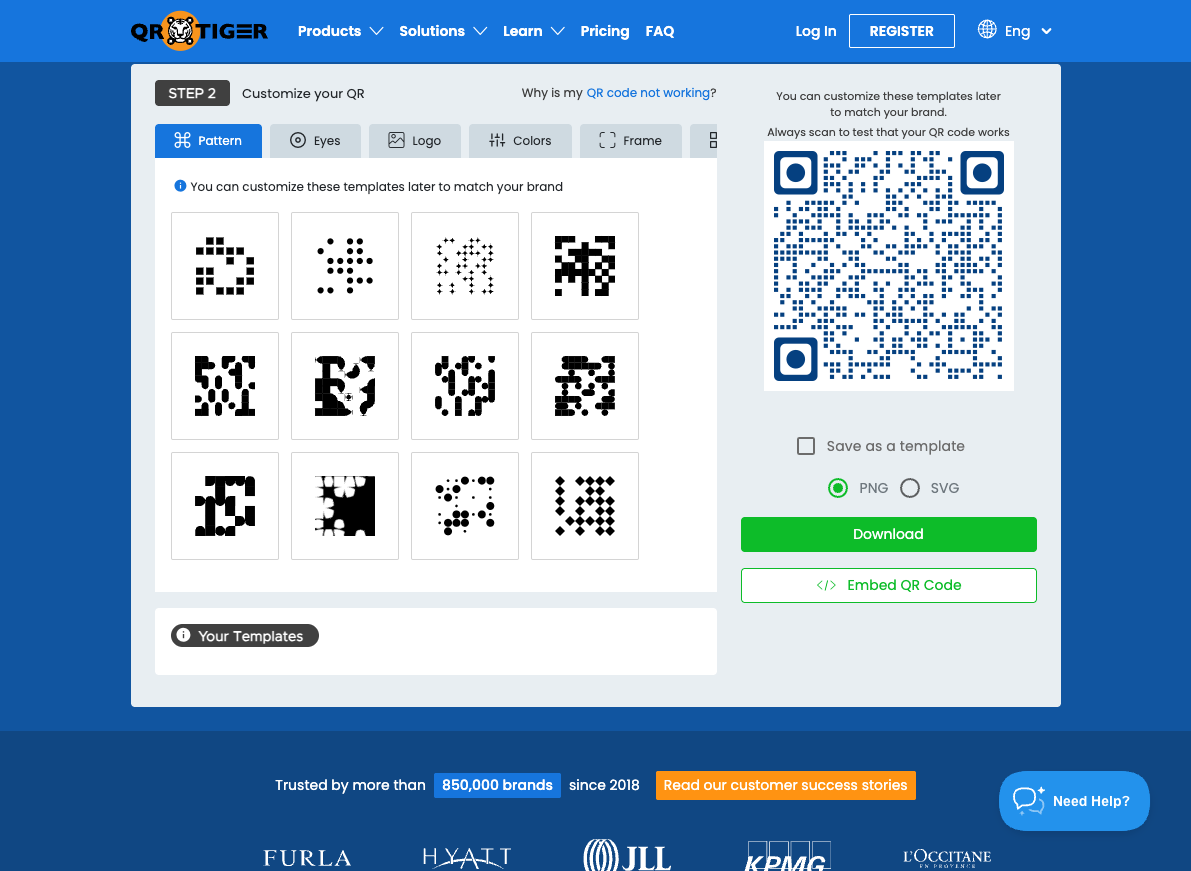
A separate static PNG used round modules and a frame. It decoded directly to our methodology URL, without a vendor short link. This validates that particular exported design, not every editor option or its reliability when printed. Saving a custom color and caption was not validated; logo upload and physical scans of this static specimen were outside the pass.
What remains untested
The Expiry control required an Advanced or Premium plan. We did not change expiration settings. A clone attempt did not produce a visible second code after refresh, but no explicit error appeared; duplication remains unvalidated rather than a confirmed product defect. Initial loading problems also coincided with browser-control errors, so we could not isolate their cause.
This was a partial free-account test. Bulk generation, API, conditional routing, paid analytics, support response times, subscription cancellation and actual expiry remain untested. The existing numeric scores are retained; the evidence and provisional flags identify the coverage of this pass.
The earlier anonymous download test
On August 7, 2026, we pasted a URL into the homepage generator with Static and PNG selected. Its preview decoded correctly, but Download opened the pricing page instead of delivering a file. We reproduced this twice that day and once more on August 10. We did not establish whether it was an intentional gate or another cause.
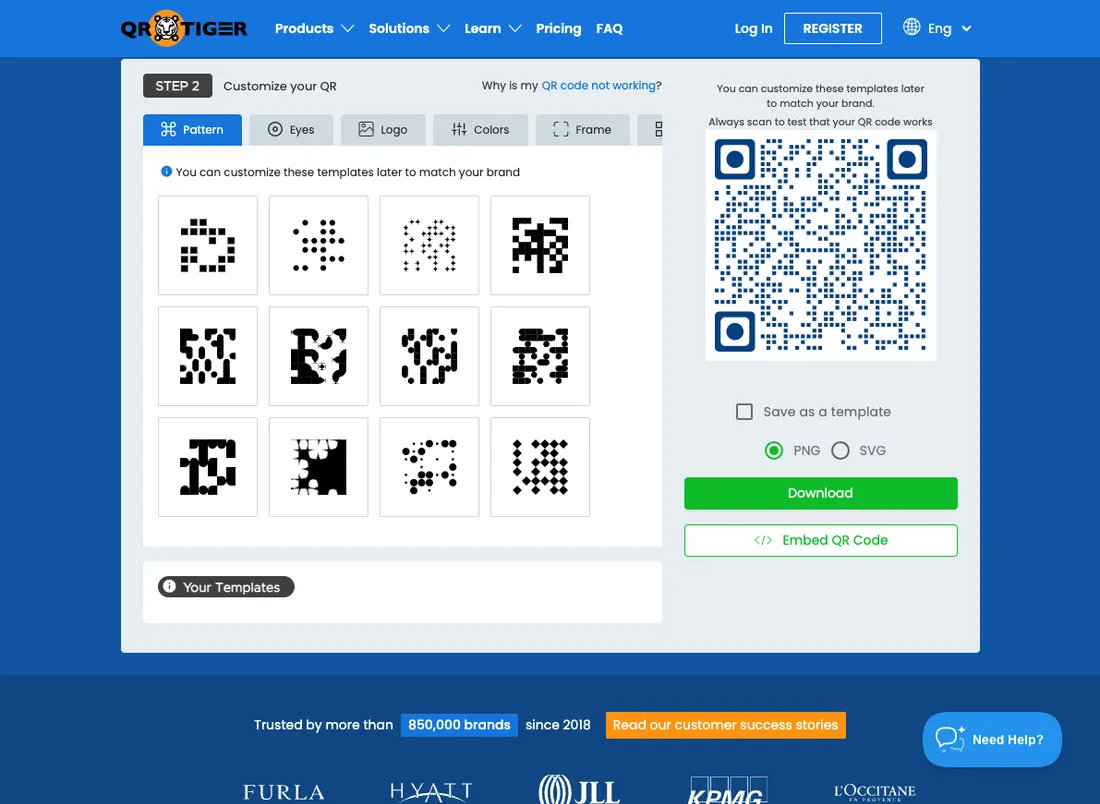
The September test does not retest that anonymous route. It does show that describing QR Tiger as unable to deliver free files would be too broad: downloads succeeded after registration.
Pricing, checked September 29, 2026
Prices are displayed in EUR to EU visitors. Re-checked September 29, 2026, on the pricing page, which now lives at /payment: Regular is 6.15 euros per month. Advanced is 14.05 euros per month on annual billing and carries the most popular label. Premium is 32.49 euros per month, annual as well. The euro amounts are converted from US$7, $16 and $37; on August 7 they read 6.07, 13.88 and 32.11 euros. Entry pricing lands near the bottom of the range we track, so cost is not this tool’s weak spot.
Finding out what each tier includes takes work. The per-tier dynamic code counts sit behind collapsed Show features panels, so comparing three plans means expanding three panels before the numbers that decide the purchase appear. That is friction rather than deception, but it is friction pointed in one direction.
The pricing FAQ read in August states that paid dynamic codes stop working when the subscription expires. We have not observed a paid code expire. The September account dashboard displayed “365 days”; this is an interface label, not evidence of a guaranteed free lifespan.
Feature breadth and design limits
Our August documentation review counted 25 types, including GS1 Digital Link and Smart URL routing, alongside bulk generation and an API. Those advanced capabilities were not exercised in the account test. Likewise, the editor exposes patterns, eyes, logos, colors, frames and templates; observing controls does not validate every resulting design.
The downloaded round-module static PNG decoded successfully in software. For print, check the actual final file on the phones and at the size your audience will use. Our free-generator comparison separates direct static output from subscription-dependent dynamic links.
Who it fits
The free account is a workable starting point for a small dynamic-code pilot: we verified editing, downloads and basic reporting. Teams considering its wider campaign tools should test the specific paid functions they need before relying on the catalogue alone.
For a single static file without registration, the account requirement may be unnecessary friction. For a long-lived printed dynamic code, budget for the published subscription and scan conditions; this short test does not establish lifetime availability.
Alternatives worth comparing
QR Code Monkey focuses on static output without an account. Our free comparison separates free offers and expiry conditions, while the dynamic comparison compares editable-code plans by need. For reporting specifically, see our analytics comparison.