
No: creating or scanning a QR code does not use it up. A restaurant can print the same QR code on twenty tables and a thousand flyers. Every customer can scan it; the pattern can still be used.
A QR code represents content, such as the address of a menu. The generator turns that address into small squares. It does not take a number from a worldwide supply. Like a letter of the alphabet, the same pattern can be used again and again.
Do you need a new QR code for every use?
The restaurant printed 1,020 copies of a QR code containing one address. It did not reserve anything in a worldwide registry. DENSO WAVE, which developed the QR code, explains that you do not need to apply for permission to use the format.
For concert tickets, the organizer may choose a different number for each ticket. At the first scan, the ticketing system records that the number has been used and may refuse a second entry. The QR code remains readable: the ticketing system decides whether to accept it.
Does a hundred-page PDF fit in a QR code?
A QR code that opens a PDF usually contains the file’s address, not its pages. The phone reads the link, then retrieves the document from the website. Whether the PDF has a hundred or two hundred pages makes no difference to the QR code if the address stays the same.
There is a limit to how much you can store in a single QR code. A longer text or address may need more small squares. Printing the image at a larger scale does not give it more room for data.
Capacity depends on the type of content and the QR settings. The capacity table and its conditions are in the technical details.
Why do some QR codes “expire”?
A QR code can remain readable while its link stops working: the page has been deleted, the domain name has not been renewed or the service has disabled the link. Some services also let users schedule an expiry date, as Bitly explains.
With a “dynamic” QR code, the link goes through an intermediary service that sends the visitor to the chosen page. This is called a redirect. The service can change the destination without changing the printed QR code, but must remain available for the redirect to work.
A QR code containing your website’s address directly avoids this intermediary. Your website still needs to stay online. Our article on self-hosting QR codes explains what you can control. None of these problems comes from a shortage of patterns.
Can two different patterns open the same link?
Yes. Look at the small squares between the three large corner markers in these two QR codes: their positions differ. Yet both contain the same address.
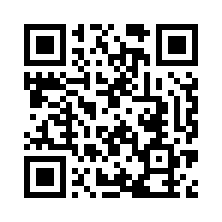 Pattern 1
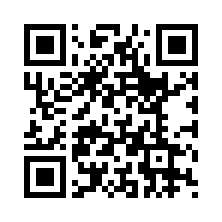 Pattern 2
https://www.qrbench.com/. Scan them to compare.Generator settings can produce different patterns for the same content. To find the link, you therefore need a QR reader. And copying an existing pattern copies its data; it does not assign a new address to it.
Is there still a limited number of patterns?
Yes: the standard QR format allows a limited range of grid sizes and cell counts. But every pattern can be reused. Even if every possible pattern had already been created, you could still create it again.
Not every black-and-white grid is a QR code. A real QR code must follow rules, including the markers that help a reader recognize it. Counting every way to color a grid therefore does not give the number of valid QR codes.
If you’re curious: how do you count a grid’s patterns?
In an unrestricted grid, each cell can be black or white. One cell gives two possibilities; two cells give four. Each extra cell doubles the number of patterns. For n cells, the calculation is 2ⁿ.
Each grid shows one example out of all possible patterns. These small grids are not QR codes.
This calculation includes an entirely white grid, which is not a QR code. It therefore does not give the number of valid QR codes. Choosing or copying a pattern does not remove any of the possibilities.
Sources and technical details
Standard QR sizes and capacities
The standard square QR code, called Model 2, comes in 40 sizes, from 21 × 21 to 177 × 177 cells. A cell is called a module. The smallest grid has 441 cells, but 2⁴⁴¹ counts every pattern in an unrestricted grid, not valid QR codes. Markers, technical information and error-correction data impose constraints. This article does not calculate the total number of valid QR codes.
For version 40 with L, the lowest correction level, DENSO publishes these capacities:
| Encoded content | Capacity |
|---|---|
| Digits only | 7,089 digits |
| The format’s alphanumeric mode | 4,296 characters |
| Binary data | 2,953 bytes |
These capacities are alternatives, not amounts to add together. Alphanumeric mode accepts uppercase letters, digits and selected symbols; it cannot represent arbitrary text. A byte does not always equal a character: in UTF-8, some characters occupy several bytes. DENSO’s version 40 table.
Stronger error correction reserves more space to protect the data. At a fixed grid size, that leaves less room for the content.
Why the two QR patterns differ
We kept the content, size and correction level unchanged. Only the mask differs: a rule that flips certain cells during generation, which the reader accounts for when recovering the data. This helps produce a readable pattern; it does not encrypt the link. Other settings can also change the pattern: grid size, correction level or how the text is encoded.
- DENSO WAVE: generation FAQ, standard QR sizes, capacity for versions 31 to 40 and error correction.
- Nayuki: generator source code and generation parameters.
- Segno: generation API. Both example codes encode
https://www.qrbench.com/using Segno 1.6.1, version 3, byte mode, correction M, masks 0 and 1, with automatic correction boosting disabled. - Bitly: scheduled expiry for links and QR codes.
Sources initially checked on October 16, 2026. DENSO pages, Nayuki’s generator overview and Bitly documentation checked again on November 4, 2026. The two original QR files are unchanged; no new phone tests were performed for this rewrite. The diagram applies 2ⁿ to unrestricted cells; it does not simulate QR encoding or reading. This article covers the standard square QR code; Micro QR and rMQR are outside its scope.
Share this article